
Why Weight Loss Gets Harder After 40 (and How Medical Weight Management Can Help)


You’re eating the same way you always have. You’re trying to make healthier choices. Maybe you’re exercising more than you did in your thirties. Yet somehow the scale keeps creeping upward, your energy feels lower, and losing weight feels harder than it used to.
If this sounds familiar, you are not imagining it.
Many women notice stubborn weight gain in their 40s and beyond, and it can feel frustrating when the strategies that once worked suddenly stop working. The truth is that your body is changing, and weight loss after 40 for women often becomes more complex than simply eating less and exercising more.
The good news? Harder does not mean impossible.
Understanding why these changes happen can help you stop blaming yourself and start working with your body instead of against it.
Why Weight Loss Gets Harder After 40
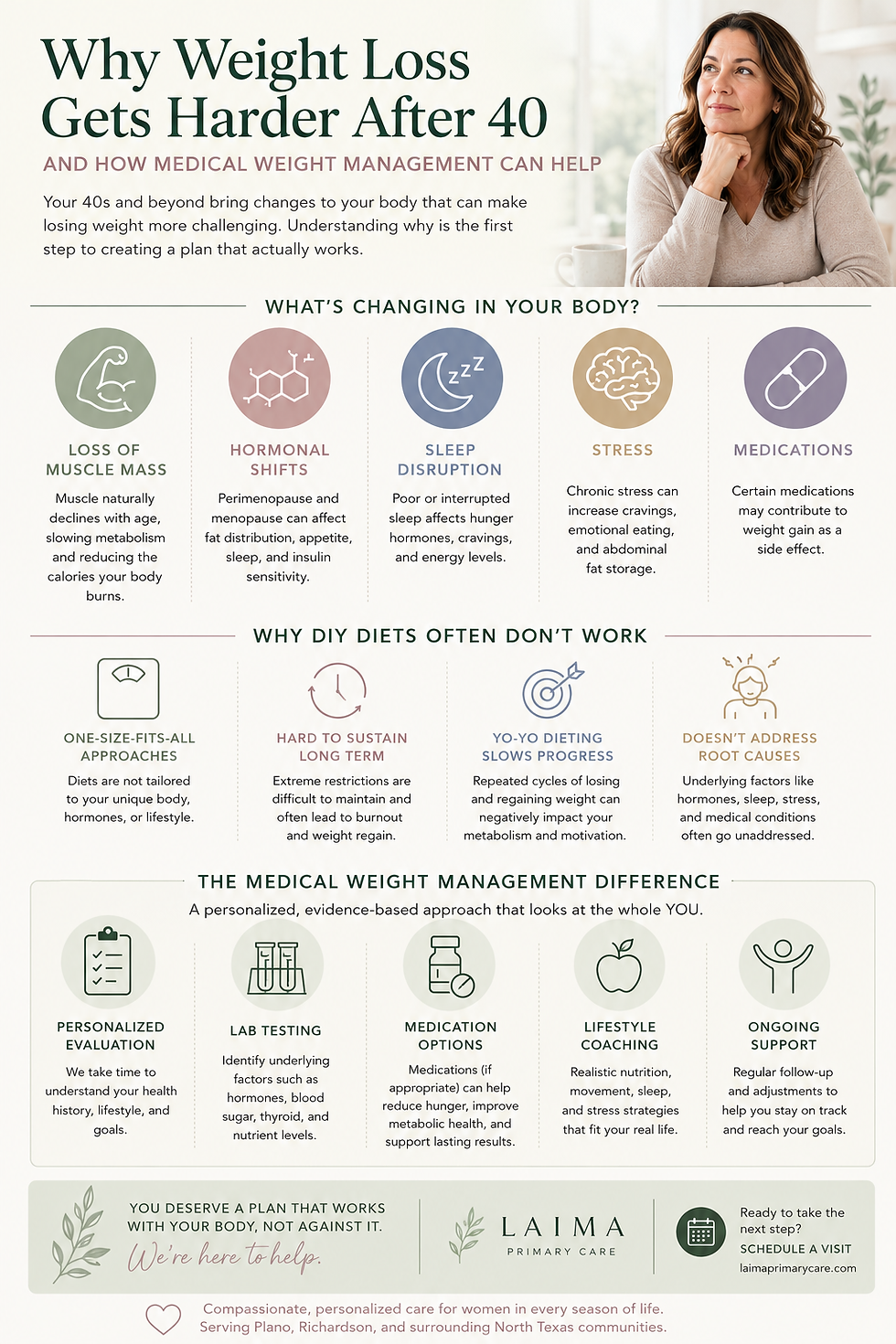
You gradually lose muscle mass
Starting around our thirties and continuing with age, we naturally begin to lose lean muscle mass. Muscle burns more calories than fat tissue, even while resting, so as muscle decreases, your metabolism can slow down over time.
This doesn’t mean your body suddenly “stops working.” It simply means that the same habits that maintained your weight ten years ago may no longer have the same effect today.
Strength training, adequate protein intake, and preserving muscle become increasingly important as we age.
Hormones begin to shift
Many women begin noticing changes during perimenopause—even years before menopause itself.
Estrogen fluctuations can influence:
Fat distribution
Appetite and hunger signals
Sleep quality
Energy levels
Insulin sensitivity
Some women notice more abdominal weight gain or feel like weight appears differently than it did in the past.
Hormones are not always the entire story, but they can absolutely contribute.
Sleep becomes more important than ever
Sleep and weight are closely connected.
Poor sleep can affect hormones that regulate hunger and fullness, increase cravings for highly processed foods, and reduce energy for physical activity.
Many women in their 40s begin experiencing:
Difficulty staying asleep
Nighttime waking
Increased stress
Hot flashes or night sweats
Feeling tired despite getting enough hours in bed
When your body is running on low-quality sleep, it often feels like you are fighting an uphill battle.
Stress can quietly affect weight
Stress is not just emotional—it creates physical changes throughout the body.
Long-term stress can contribute to:
Increased cravings
Emotional eating
Fatigue
Poor sleep
Increased abdominal fat storage
Many women in their forties are balancing careers, caregiving, aging parents, family responsibilities, and countless competing demands. When life feels overwhelming, health often becomes the last thing on the list.
Medications can play a role
Sometimes weight changes are not entirely lifestyle-related.
Certain medications may contribute to weight gain, including some:
Antidepressants
Steroids
Birth control methods
Diabetes medications
Blood pressure medications
This does not mean you should stop medications, but it does mean your overall health picture deserves a closer look.
Why DIY Diets Often Stop Working
Many women tell me they have tried:
Cutting carbs
Intermittent fasting
Low-fat diets
Cleanses or detoxes
Very low-calorie plans
Endless cycles of starting over on Monday
The problem is not effort.
The problem is that most diets use a one-size-fits-all approach for something that is highly individual.
Two women of the same age and weight may have completely different factors driving weight gain.
One may be dealing with insulin resistance.
Another may have untreated sleep problems.
Another may have medication-related changes.
Another may simply be losing muscle mass.
You cannot solve every problem with the same diet plan.
What Makes Medical Weight Management Different?
Medical weight management looks beyond the number on the scale.
At Laima Primary Care, the goal is to understand why weight changes may be happening and create a personalized plan that fits your life.
That may include:
A medical evaluation and labs
Depending on your needs, this may include looking at factors such as:
Blood sugar and insulin markers
Cholesterol levels
Thyroid function
Vitamin deficiencies
Other health conditions affecting weight
Medication options when appropriate
For some patients, prescription weight management medications may be helpful tools.
Medication is not a shortcut and it is not failure.
For the right person, it can reduce excessive hunger, improve metabolic health, and make healthy lifestyle changes more sustainable.
Realistic lifestyle guidance
The goal is not perfection.
The goal is sustainable changes that support:
Healthy nutrition
Movement you actually enjoy
Better sleep
Stress management
Long-term success
You Are Not Failing Your Body
If weight loss feels harder than it used to, it does not mean you have become lazy or lost your willpower.
Your body changes over time, and your healthcare approach should change with it.
You deserve care that looks at the bigger picture—not judgment, quick fixes, or another restrictive diet plan.
If you are struggling with weight loss after 40 and want a personalized approach, Laima Primary Care offers medical weight management designed around your goals, your health history, and your life.
Schedule a visit and let's create a plan that works with your body—not against it.
FAQ's on Weight Loss After 40:
Why is weight loss harder after 40 for women?
Weight loss after 40 for women often becomes more difficult because of changes in muscle mass, hormones, sleep, stress levels, and metabolism. These factors can affect how your body stores fat, regulates appetite, and uses energy.
Does menopause always cause weight gain?
Not necessarily. Menopause itself does not automatically cause weight gain, but hormonal changes, decreased muscle mass, changes in sleep, and reduced activity levels can contribute to weight changes during this stage of life.
Can hormones cause belly fat after 40?
Hormonal changes during perimenopause and menopause can influence where fat is stored in the body. Many women notice more weight around the abdomen, although hormones are often only one piece of a larger picture that can include stress, sleep, and lifestyle factors.
What is medical weight management?
Medical weight management is a personalized approach to weight loss that may include a health evaluation, lab testing, lifestyle guidance, and medications when appropriate. The goal is to identify factors that may be contributing to weight changes and create an individualized plan.
When should I see a healthcare provider for unexplained weight gain?
Consider scheduling a visit if you notice significant or persistent weight changes despite healthy habits, especially if you also have fatigue, sleep issues, menstrual changes, increased hunger, or other symptoms that concern you.


Comments